$300 Whitening for a Cause


Have you ever looked at your smile in the mirror and noticed that your upper front teeth extend too far over your lower teeth? Or perhaps your dentist has mentioned that your bite isn’t quite where it should be. An overbite is common, but when it’s excessive, it can affect more than just the appearance of your smile. It may contribute to uneven tooth wear, jaw discomfort, and difficulty biting comfortably.
The good news is that Invisalign clear aligners can correct many mild to moderate overbites by gradually moving teeth into healthier positions. Using a series of custom-made, removable trays, Invisalign applies controlled pressure to guide your teeth toward a planned result.
At The Reno Dentist, Dr. Shane Sykes can evaluate your bite and help determine whether Invisalign is an appropriate option for your smile. Let’s look at how the process works and what you can expect along the way.
What Is an Overbite, and Why Does It Matter?
An overbite describes the vertical overlap of your upper front teeth over your lower front teeth when you bite down. A certain amount of overlap is normal and helps your teeth function properly. The concern arises when the overlap is excessive or contributes to dental problems.
A deep overbite may cause the lower front teeth to press against the roof of the mouth or the backs of the upper teeth. Over time, this can contribute to enamel wear, gum irritation, or damage to the teeth.
An overbite is also different from an overjet. With an overjet, the upper front teeth project forward horizontally beyond the lower teeth. Some people have both conditions, and the distinction matters when planning treatment.
Wondering whether your overbite needs treatment? A dental evaluation can help determine whether your bite is within a healthy range or whether correction could improve your comfort, tooth function, and smile.
How Does Invisalign Move Teeth to Correct an Overbite?
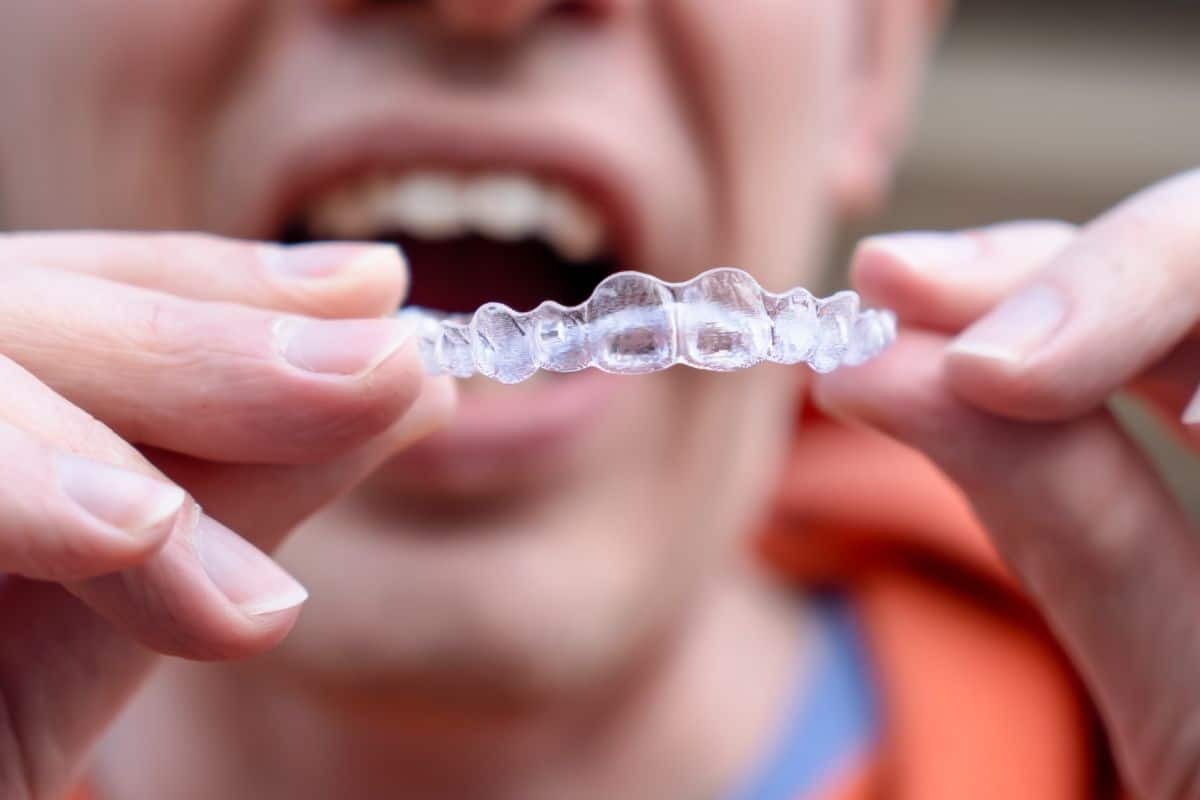
Invisalign uses a series of clear, custom-fitted plastic aligners to move teeth gradually. Each aligner is designed to make small adjustments to tooth position, bringing you closer to the treatment goal with each stage.
Here’s how the process works.
1. Custom Aligners Apply Gentle, Controlled Pressure
Your dentist begins by examining your teeth and bite, then develops a personalized treatment plan. Digital scans may be used to create a three-dimensional model of your teeth and map out the intended movements.
You’ll receive a sequence of aligners, each shaped slightly differently from the previous one. When you wear a tray, it applies controlled pressure to specific teeth. As your supporting bone remodels in response to that pressure, the teeth can gradually move into new positions.
You’ll typically switch to a new set of aligners according to your dentist’s instructions. Each tray continues the movement planned for that stage.
2. Attachments Help Guide Tooth Movement
Some Invisalign treatments use small, tooth-colored composite attachments bonded to selected teeth. These tiny shapes give the aligners a better grip and help deliver forces needed for certain movements.
For overbite correction, attachments may help control tooth rotation, tipping, or vertical positioning. Their placement depends on your individual bite and treatment plan.
Not everyone needs the same attachments, and they aren’t a sign that treatment is going poorly. They’re simply one of the tools that can help aligners move teeth more predictably.
3. Bite Ramps May Help Adjust the Overlap
In some cases, Invisalign aligners can incorporate small features called bite ramps. These are designed to guide how the upper and lower teeth meet while you wear your aligners.
Depending on your bite, bite ramps may help reduce a deep overlap by influencing how the front teeth come together and supporting planned tooth movements. Your dentist will decide whether these features are appropriate for your case.
4. Your Teeth Move in Small Stages
Invisalign doesn’t shift your teeth into their final positions overnight. Each aligner makes a relatively small adjustment, and the full sequence works toward the desired result.
Consistent wear is essential. Many treatment plans require aligners to be worn for approximately 20 to 22 hours per day, removed mainly for eating, drinking anything other than water, and cleaning your teeth.
If you frequently leave your aligners out, your teeth may not track as planned. That can slow progress or require adjustments to your treatment.
Can Invisalign Correct Every Type of Overbite?
Invisalign can correct many overbites, but the results depend on what’s causing the overlap and how severe it is. Some overbites are primarily related to tooth positioning, while others involve the relationship between the upper and lower jaws.
Mild or moderate dental overbites may respond well to clear aligner treatment. More complex cases can require additional orthodontic techniques, fixed braces, or a combination of treatments. Significant jaw discrepancies may need evaluation by an orthodontist or, in selected cases, an oral and maxillofacial surgeon.
This is why a personalized assessment matters. A treatment that works well for one person may not be the best option for someone with a different bite pattern.
If you’re considering Invisalign, visit our dental office located at 855 W 7th St #200, Reno, NV 89503, United States, to discuss your smile goals and learn which treatment options may suit your needs.
How Long Does Invisalign Take to Fix an Overbite?
There’s no single timeline for overbite correction. Treatment length depends on the amount of movement required, the complexity of your bite, your body’s response to treatment, and how consistently you wear your aligners.
Some relatively straightforward cases may take several months, while more involved treatments can take a year or longer. Your dentist can provide a more realistic estimate after evaluating your teeth and developing a treatment plan.
You’ll also need periodic checkups to monitor progress. If your teeth aren’t following the planned movements, your dentist may recommend refinements or other changes to help keep treatment on track.
What Can You Expect During Invisalign Treatment?
Most people find Invisalign manageable because the aligners are removable and nearly invisible. Still, it’s normal to experience some pressure or mild soreness when starting a new set. This generally eases as your teeth adjust.
To get the most from treatment, keep these habits in mind:
- Wear your aligners as directed. Consistency helps your teeth follow the planned movements.
- Remove them before meals. Eating with aligners can damage them or trap food against your teeth.
- Clean your teeth before putting them back in. This helps reduce plaque buildup and lowers your risk of cavities.
- Clean your aligners regularly. Follow your dentist’s instructions to keep them fresh and clear.
- Attend scheduled checkups. Your dentist needs to monitor tooth movement and make sure your bite is improving as expected.
Once treatment is complete, retainers are usually necessary to help maintain your new tooth positions. Teeth can gradually shift over time, even after successful orthodontic treatment.
Is Invisalign Worth Considering for Your Overbite?
Correcting an overbite can do more than improve the look of your smile. Depending on your individual situation, treatment may help create a more comfortable bite, reduce uneven tooth contact, and make oral hygiene easier in crowded areas.
Invisalign offers a discreet, removable approach that fits many adults’ lifestyles. However, it’s not the right solution for every bite, and successful treatment depends on proper planning and consistent wear.
At The Reno Dentist, Dr. Shane Sykes can assess your overbite, explain what Invisalign may realistically achieve, and discuss alternatives if another approach would better meet your needs. Contact The Reno Dentist today
A healthier bite starts with understanding your options. With a thorough evaluation and a personalized plan, you can take an informed step toward a smile that looks good and functions well.
FAQs About Invisalign
Q 1. Can Invisalign fix an overbite in adults?
A: Yes, Invisalign can correct many mild to moderate overbites in adults by gradually moving teeth into better positions. More complex cases may require additional orthodontic treatment.
Q 2. How does Invisalign correct an overbite?
A: Invisalign uses a series of custom clear aligners to apply controlled pressure to teeth. Attachments and bite ramps may also help guide tooth movement and improve how the upper and lower teeth fit together.
Q 3. How long does Invisalign take to correct an overbite?
A: Treatment time varies depending on the severity of the overbite, the required tooth movements, and aligner wear. Some cases take several months, while more complex cases may take a year or longer.
Q 4. Is Invisalign painful when correcting an overbite?
A: You may experience mild pressure, tightness, or soreness when starting a new set of aligners. These sensations are generally temporary as your teeth adjust to the planned movements.